
Brown County Criminal History Checks
Begin with the type of proof needed. Wisconsin Circuit Court Access, also known as WCCA or CCAP, is the free public view for Brown County circuit cases. Select Brown County and focus on CF felony, CM misdemeanor, and CT criminal traffic files. Read every count. The filed charge, plea, disposition, and disposition date can differ from the first allegation. The Brown County Clerk of Circuit Court remains the source for the complaint, judgment, certification, and older material that is not available as a download.
Custody and police reports take different routes. The Curry Lane jail search answers whether a person is in or has passed through Brown County jail custody. An incident narrative comes from the agency that wrote it. The Wisconsin Online Record Check System, or WORCS, supplies the official state name-based repository response. These records overlap, but none replaces the rest.
- Search WCCA by name or case number and limit the county and case type.
- Match more than a name, using dates and other public case details with care.
- Open each count and read the plea, outcome, and sentence.
- Ask the clerk for the official document when the public index is not enough.
- Compare jail, police, or WORCS data only for the separate question each source answers.
The official WCCA search shows the public interface used for this first pass.
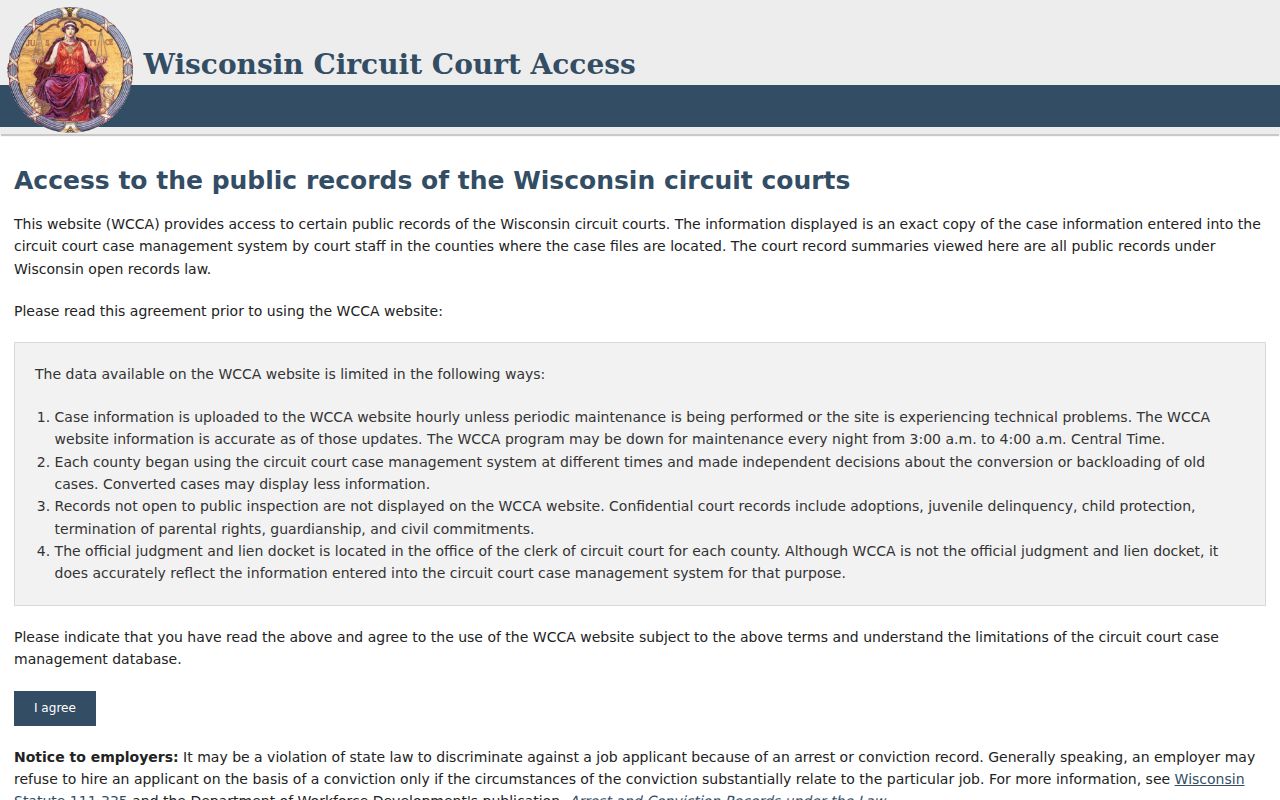
Its result is an index and event view, so the Brown County clerk should confirm any entry that must be read as an official court record.
WCCA, WORCS, or Curry Lane?
Choose WCCA when the question is what prosecutors filed and what a Brown County judge decided. Choose WORCS when a Wisconsin DOJ repository response is needed. Use the Brown County jail search for present or prior local custody. A jail hit is a booking fact, not proof of conviction. A WCCA case may exist without a matching CIB cycle if fingerprints were not linked or reporting was delayed. WORCS can also omit a court event that has not yet matched the repository record.
The paths are best understood as a short flow: police report → jail booking and fingerprint transaction → prosecutor decision → Brown County Circuit Court file → reported disposition at the Crime Information Bureau. A release, declined charge, amendment, sealed event, or older paper file can break the simple pattern. Compare the source agency with the court outcome before drawing a conclusion.
The WORCS request screen is the official repository entry point.
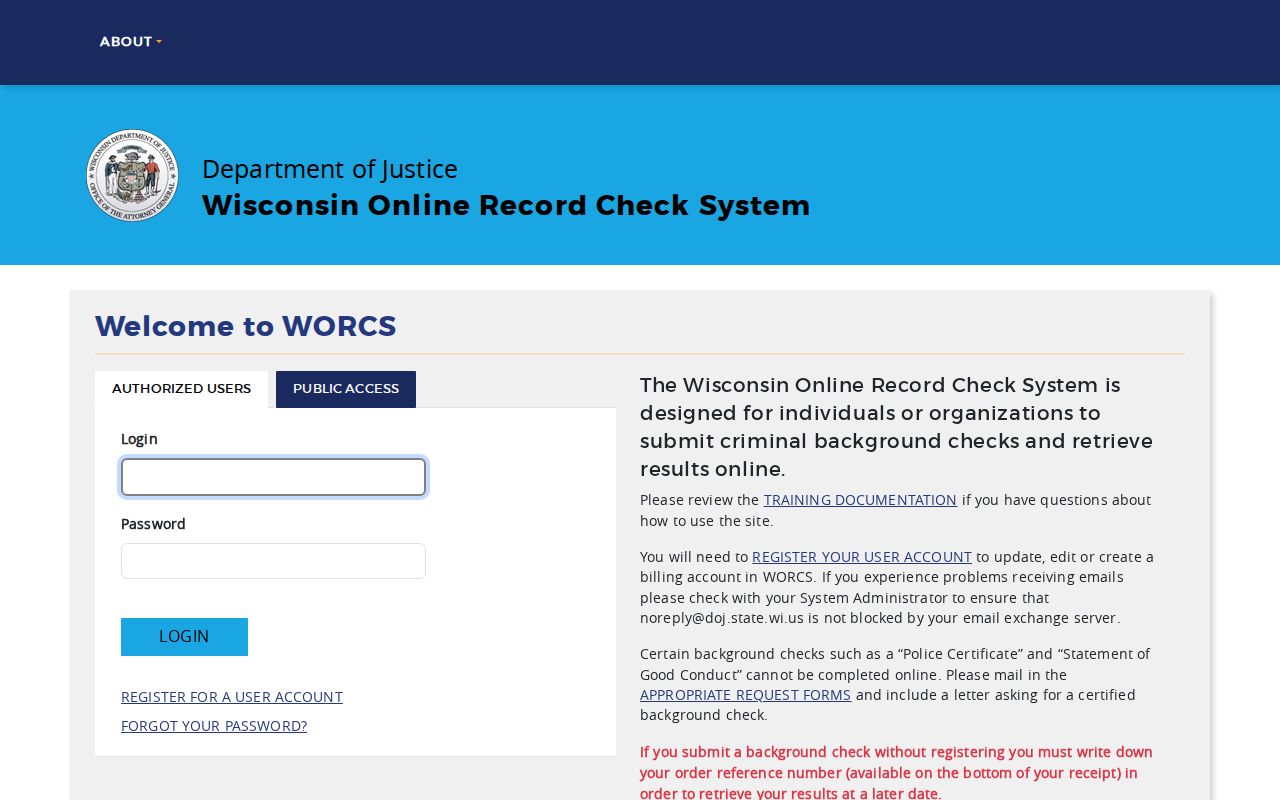
The order route is distinct from a free WCCA docket search and from a Brown County jail lookup.
Official Background Checks in Wisconsin
The Wisconsin Department of Justice Crime Information Bureau maintains the central criminal-history repository. WORCS accepts public name-based requests with or without an account. A person ordering without an account must save the order reference number. Current state material reports $15 for an online request and $20 by mail, though the live order screen controls and purpose-specific pricing can differ. A mail request uses form DJ-LE-250, a return envelope, and payment sent to the Crime Information Bureau in Madison.
Name matching depends on the identifiers supplied and the data reported to CIB. It is not the same as a fingerprint comparison. Fingerprint-supported review and authorized submissions follow the program tied to the purpose. The FBI Identity History Summary is another fingerprint product for the subject of the record. It does not turn WCCA, WORCS, or a Brown County sheriff check into interchangeable searches.
| Channel | Best use | Key limit |
|---|---|---|
| WORCS online | Wisconsin name-based repository response | Name match, reported state data |
| WORCS mail | Single-name request and certain certificate routes | Form and mailed payment required |
| Fingerprint review | Identity-linked subject or authorized check | Program and purpose rules control |
Brown County Arrest Reports Stop Short
The Brown County Sheriff Records Division keeps its investigative files at 2684 Development Drive in Green Bay. Records staff accept requests through JustFOIA, in person, by mail, by phone, or by fax. The office states that requests can take up to ten business days and are handled in the order received. That is a local service estimate, not a fixed deadline in Wisconsin law. Duplicate requests can also lead to duplicate work and fees.
A sheriff report may contain the allegation narrative, agency observations, crash details, or an arrest event. It cannot supply the final court disposition. Filed charges belong to the Brown County clerk's case file. Active investigations, juvenile material, health details, victim-sensitive facts, and motor-vehicle-derived personal data may be withheld or redacted. A DPPA form can be required when protected driver data is at issue, but Wisconsin requesters do not have to state a purpose for every ordinary public-record request.
The Brown County sheriff contact page identifies the correct local office.
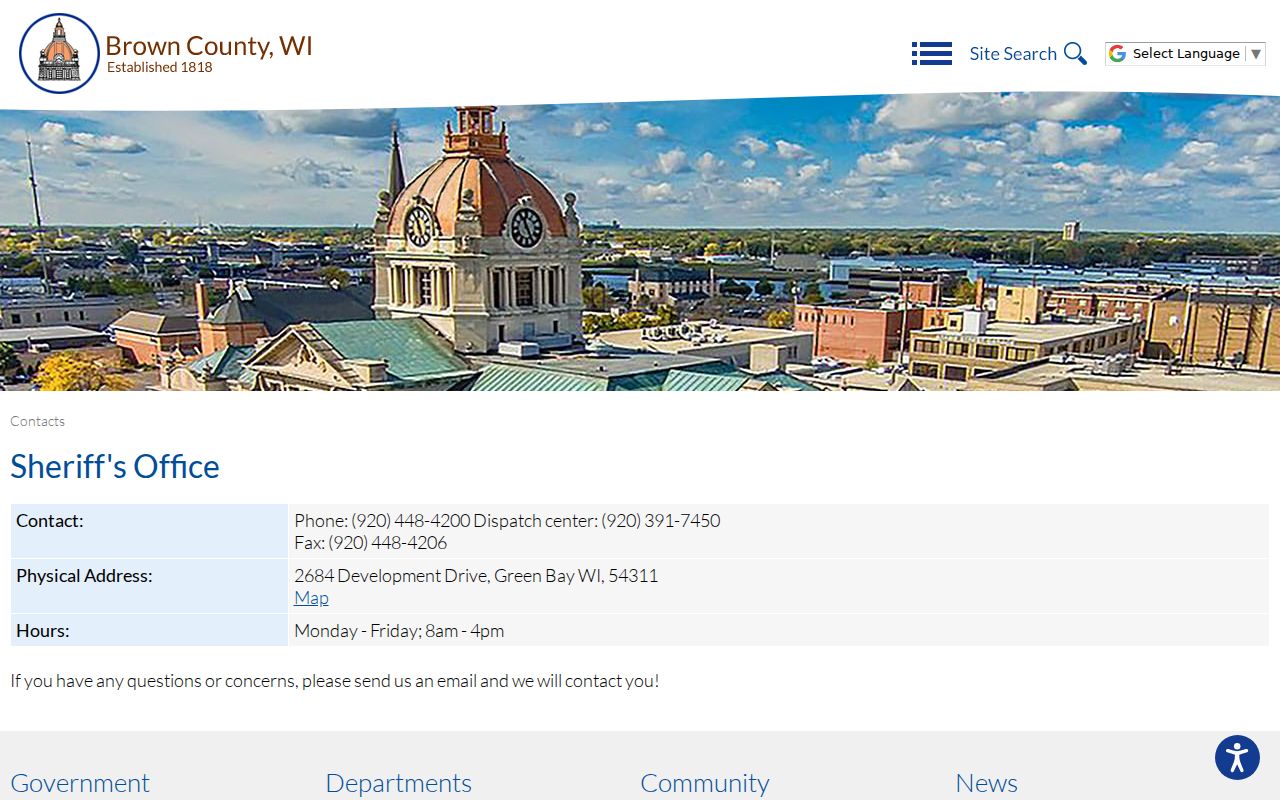
Use that channel for sheriff-created records, then use the clerk for the case result.
Kinds of Criminal Records
One Brown County event can create several records with different custodians. The arresting police agency writes the incident or arrest report. The jail creates custody and booking data if the person is confined. Prosecutors decide what to file. Brown County Circuit Court then records the complaint, hearings, pleas, outcomes, judgment, and sentence. CIB receives reportable identification and disposition data. Wisconsin DOC holds later prison and community-supervision information.
- Incident report: the agency narrative and allegations, with lawful redactions.
- Booking record: jail intake, booked charges, bond, custody, and release facts.
- Circuit case: filed counts, events, pleas, dispositions, and sentence.
- CIB history: fingerprint-associated Wisconsin arrest and disposition cycles.
- Municipal file: ordinance or traffic citations that are not state crimes.
- Federal docket: nonsealed federal filings in the Eastern District of Wisconsin.
The full Brown County court case lookup is the better route when a filed charge or sentence matters more than the original arrest claim.
Brown County Court Records Since 1910
Brown County approved a new courthouse in 1908 as its population grew. C. E. Bell designed the Beaux-Arts building, and construction finished in 1910. Its January 1911 dedication reportedly drew more than 10,000 visitors. The dome, Ionic entrances, murals, restored stenciling, terrazzo and marble mosaic floors, and surviving tower clock make the public records building part of the county's civic record as well as the home of its circuit files.
A five-phase restoration and addition ran from 1988 through 1992. Craftspeople used old photographs, paint analysis, tracings, and recreated fixtures before the 1993 rededication. Today, the Brown County clerk's counters at 100 South Jefferson Street remain the place for filed criminal cases, certified copies, and older material. Since October 2025, visitors use the East Walnut Street security entrance and pass through screening.
The county's courthouse history documents that setting.
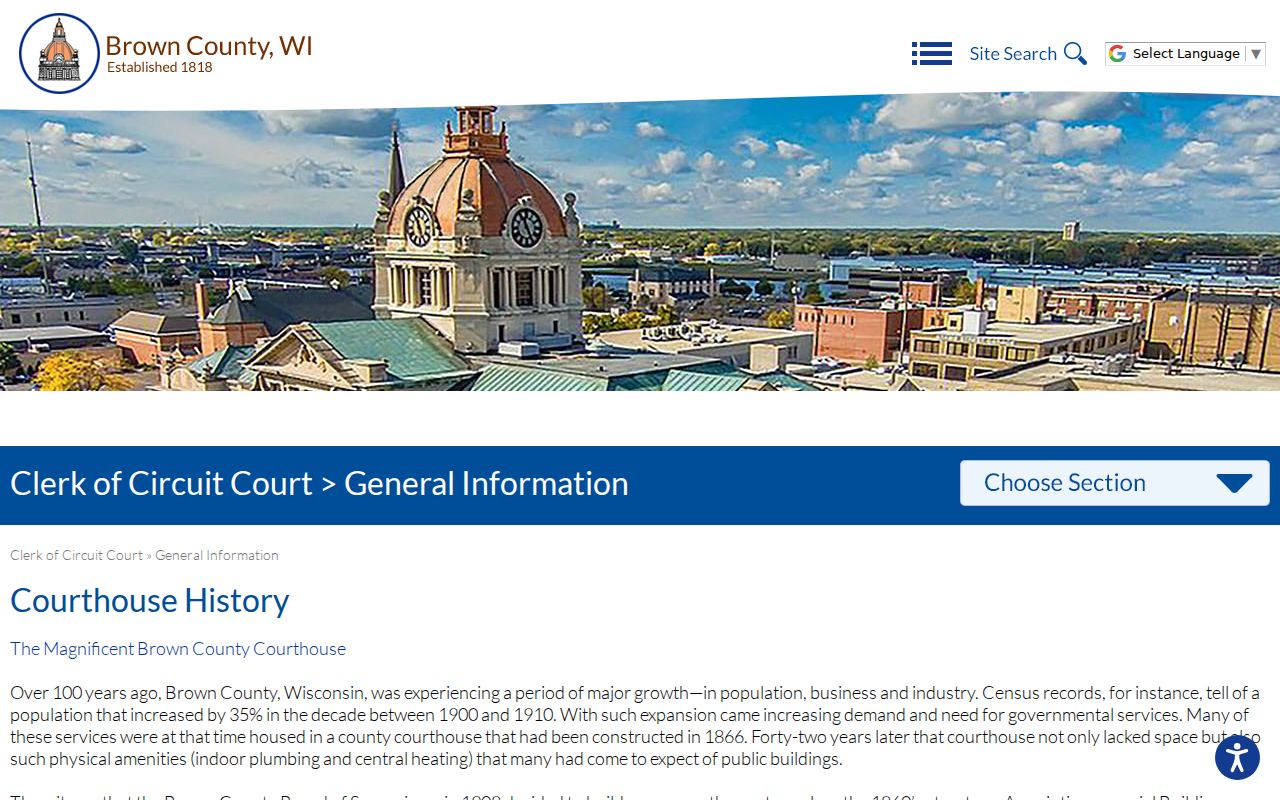
The same building now connects Brown County's historic courthouse with its working criminal court record counters.
Brown County Criminal Records: Contents
The details depend on the source. A CIB response may include names and aliases, birth data, state or FBI identifiers, arrest agencies and dates, charges, court findings, sentences, and correctional admission or release. WCCA instead centers on a public case number, caption, filing date, judge, lawyers, count-level statutes, pleas, dispositions, hearings, sentence, and financial entries. Brown County jail data is narrower and centers on custody.
| Name and identifiers | Names, aliases, date of birth, or record numbers where lawful and available. |
|---|---|
| Arrest or booking | Agency, event date, alleged charges, booking reference, bond, custody, or release. |
| Filed charges | Count, statute, severity, offense date, and later amendments. |
| Disposition | The outcome for each count, including conviction, acquittal, dismissal, or read-in treatment. |
| Sentence | Confinement, extended supervision, probation, restitution, or other public terms. |
| Case events | Hearings, motions, warrants, judgment, and post-judgment activity. |
A dismissed count is not a conviction. In Wisconsin, a dismissed but read-in matter may be considered at sentencing by agreement, yet it remains distinct from a guilty disposition on that count.
Brown County Jail or Wisconsin DOC?
The Brown County Jail at 3030 Curry Lane holds local custody records. Its search supports first and last name, date of birth, an Include released inmates choice, and six identifier routes: booking number, permanent number, state ID, county ID, FBI number, and ICE number. The official jail page reports 662 adult beds, 15 juvenile beds, and about 840 people in custody during 2025 when electronic monitoring is included. That last figure does not mean 840 people were inside the building.
A Brown County booking can also coexist with physical placement in another county because Brown County has boarded people elsewhere during crowding. Call the jail when current location is uncertain. After a state prison sentence, the Wisconsin DOC Persons in Our Care or Client Search becomes the proper public locator. Probation, parole, and extended supervision are run by the state Division of Community Corrections, not by a county probation department.
The Brown County Jail Division page explains the local custody operation.
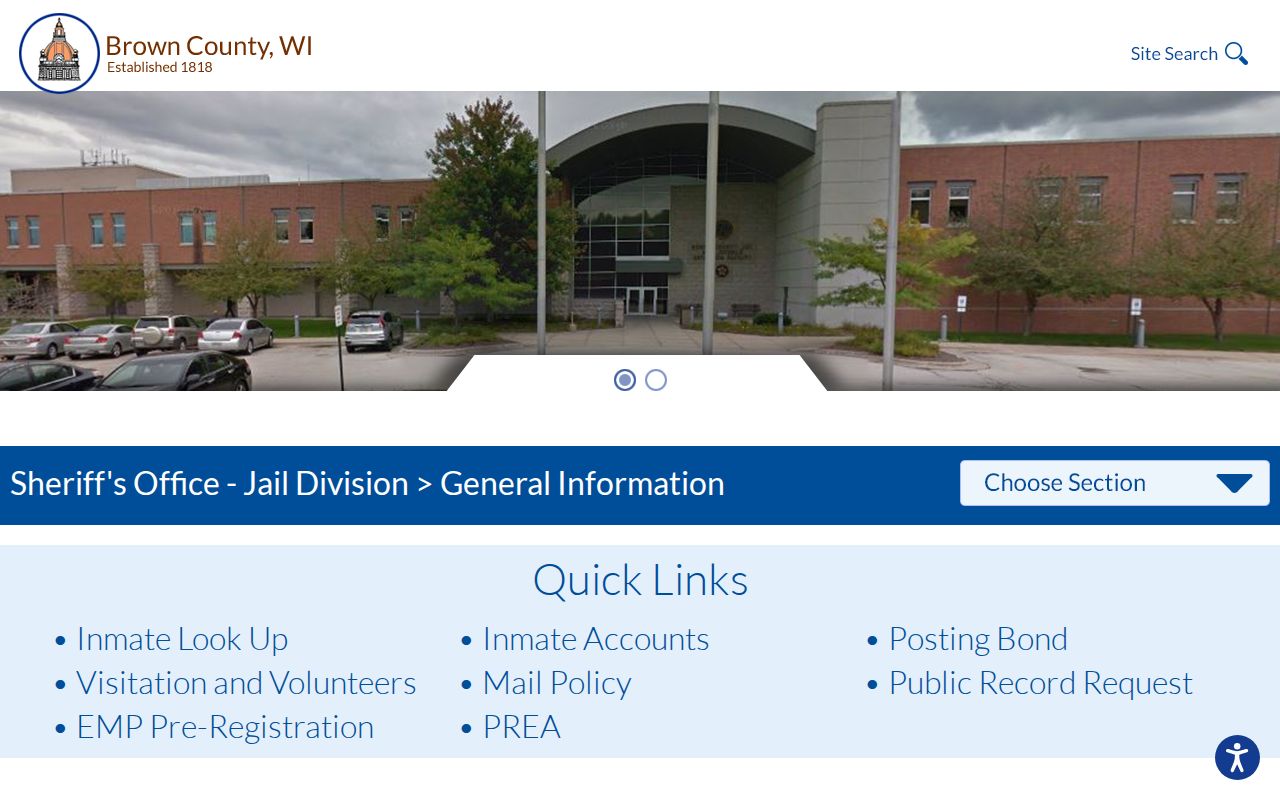
Use its local custody tools before switching to Wisconsin DOC for sentenced state custody.
Wisconsin Public Access Laws
Wisconsin Public Records Law starts with a strong presumption of access, but access is not absolute. A request must reasonably describe an existing record. The custodian need not answer a question or create a new document. Brown County may charge actual, necessary, direct reproduction costs and qualifying location costs. A written denial should identify the reason and the review route.
Key Wisconsin laws:
Wis. Stat. § 19.31 states the public-access policy.
Wis. Stat. § 19.35 covers requests, inspection, copies, and costs.
Wis. Stat. § 19.36 identifies statutory limits and confidential material.
Wis. Stat. § 165.83 addresses state criminal-identification functions and reporting.
Brown County court access also depends on court rules and confidentiality law. Juvenile records, sealed material, victim information, health data, and active investigative facts can receive different treatment. Ask for a specific record and a useful date range rather than asking the custodian to research a broad question.
Brown County Warrant Record Fallback
No official public countywide active-warrant database was verified for Brown County. The jail locator is not a warrant search, and the county's general mobile app has no verified app-only warrant tool. WCCA can show a warrant event in a filed circuit case, but it may lag and cannot serve as real-time clearance.
For one's own possible warrant, inspect the related WCCA case, then call Brown County Clerk Criminal and Traffic at 920-448-4504. Contact the sheriff at 920-448-4200 when law-enforcement confirmation is needed. A narrow JustFOIA request may locate a releasable sheriff record. Green Bay, De Pere, and Howard municipal warrants must also be checked with the issuing municipal court. Follow the court's directions for appearance or bond and obtain written recall or quash confirmation.
Arrest warrants authorize custody. Bench warrants often arise from a missed appearance or order. Search warrants authorize a search and may stay nonpublic before execution. A tip line or old docket event is not legal clearance.
Restricted, Sealed and Expunged Records
Wisconsin expungement under section 973.015 is narrow. The sentencing court usually must decide at sentencing that an eligible record will be expunged after successful completion. A later request normally cannot fix the absence of that decision. Eligibility depends on the person's age at the offense, the offense classification, statutory exclusions, and the sentence. Successful completion generally requires no later conviction, no revocation, and completion of the ordered conditions.
For a Brown County case, inspect WCCA and obtain the judgment or sentencing language from Clerk Criminal and Traffic. Use the current circuit court certification form and file it in the original Brown County case. Then compare WCCA with a CIB self-review after processing. Expungement restricts the circuit record from ordinary access, but it does not promise destruction of every police or DOJ record. A pardon is separate and does not erase the court file.
The Wisconsin expungement statute sets the controlling limits. Juvenile confidentiality and expungement follow separate law.
Brown County Treatment Court Records
Criminal Justice Services at 300 East Walnut Street operates treatment courts, Pretrial Services, Re-entry Services, and diversion. Brown County materials identify Drug, Heroin and Opioid, OWI, Veterans, Mental Health, Young Adult, and Family Recovery courts. These programs can change how an eligible matter moves, but they do not turn a public court index into the official file.
Pre-charge diversion begins with a District Attorney referral and is aimed at eligible low-risk or first-time matters. General treatment-court criteria exclude violent, sex-based, and enterprise-trafficking cases. When a case is filed, WCCA and the Brown County clerk still show the public procedural record. Program participation, treatment details, and protected personal information may not all be public.
The county's Criminal Justice Services overview names the local programs.
That office is separate from the clerk, sheriff, District Attorney, and state repository, even when its work touches the same Brown County case.
City-by-City Criminal Records in Brown County
City records begin with the office that created them. Green Bay and De Pere police keep their own incident reports, while their municipal courts hold ordinance and traffic citation files. Howard is the key routing exception. Three Brown County sheriff Directed Enforcement Officers serve the village, so sheriff records staff hold Howard officer and arrest reports. Howard Municipal Court separately keeps its ordinance cases. All three places route state felony and misdemeanor prosecutions to Brown County Circuit Court.
Green Bay Record Check
Population 106,962 · City police records and municipal files since 2004.
De Pere Record Check
Population 25,441 · Police forms and Wednesday municipal court.
Howard Record Check
Population 21,776 · Sheriff reports with a separate village court file.
The county's Brown County overview provides local context for these record systems.

Local police custody, municipal citations, and Brown County circuit prosecutions remain separate parts of the same regional justice system.
Brown County Police Report Routing
Brown County has no unified police-report archive. Sheriff reports go to the Development Drive records office or JustFOIA. Green Bay Police accepts requests at its South Adams records counter and by email, with email delivery free and paper copies listed at 25 cents per page. De Pere Police uses its Administrative Services channel by email, mail, fax, or hand delivery. Tribal, campus, village, and state agency reports stay with the agency that wrote them.
The sheriff's self-reporting rules expressly exclude incidents handled by Green Bay, De Pere, Ashwaubenon, Wrightstown, Hobart, Pulaski, and Lawrence. That boundary is useful evidence that a Brown County search cannot start with the sheriff every time. Crash reports written by the sheriff commonly appear through CrashDocs after three to five business days, while other agencies use their own channels.
The Brown County Sheriff's Office page describes the county agency.
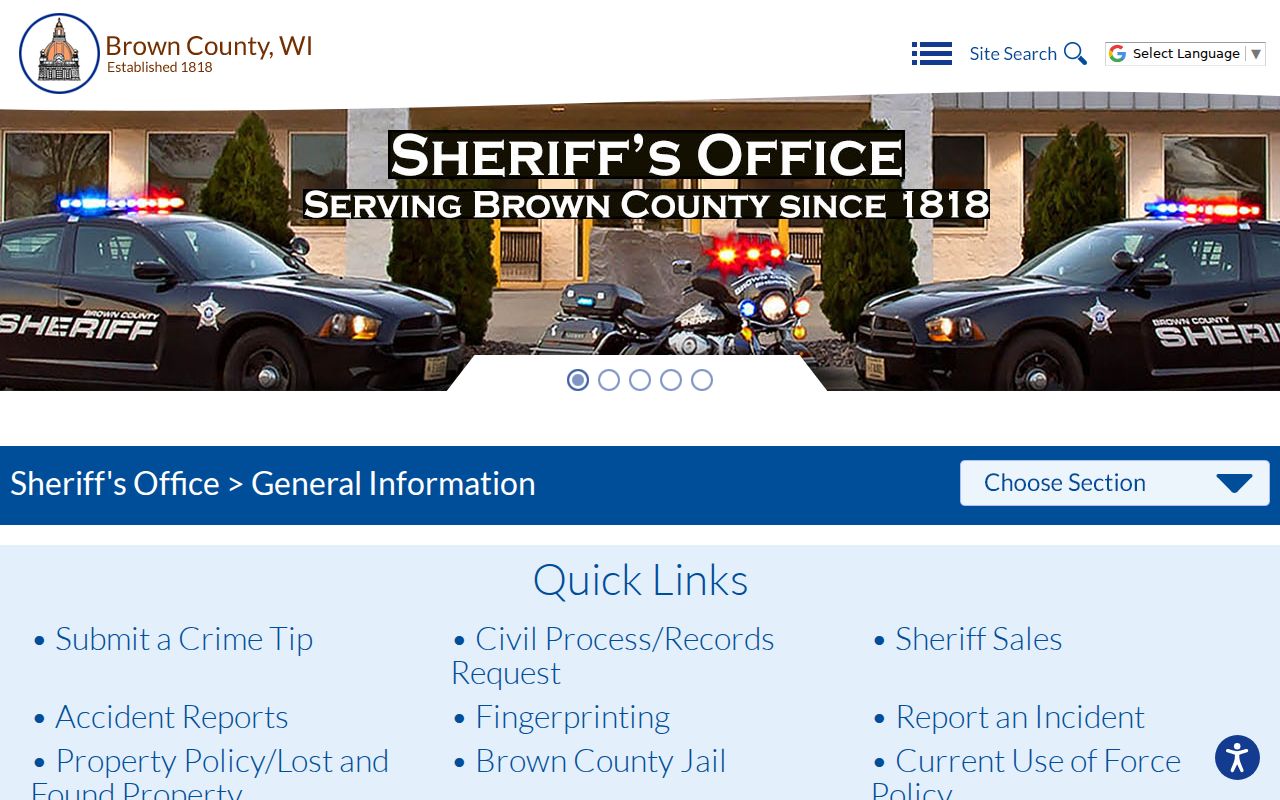
Identify the writer of the report first, then move to Brown County Circuit Court only if prosecutors filed a state criminal case.